Article Summary
Choosing the right Hydraulic Winch is rarely about buying the biggest unit on the page. Most buyers are trying to solve a more practical problem: how to move, pull, lift, or hold heavy loads without losing control, wasting time, or creating maintenance headaches later. In demanding industries, a winch is not just a component. It becomes part of the workflow, part of the equipment logic, and sometimes part of the safety margin too. This article looks at what really matters when selecting a Hydraulic Winch, why it is often preferred for rugged-duty applications, which mistakes make procurement more expensive than expected, and how a manufacturer such as Ningbo Xinhong Hydraulic Co.,Ltd. can support projects that need dependable performance and application-based matching rather than generic catalog promises.
Outline
-
The real operating pressure behind heavy lifting and pulling jobs
-
The practical strengths of a Hydraulic Winch in difficult environments
-
How to compare performance, control, installation fit, and long-term value
-
Typical applications where hydraulic winches outperform lighter-duty solutions
-
Common sourcing and specification errors that can delay projects
-
Why experienced technical support can reduce risk before and after delivery
Why Is Heavy-Duty Work So Demanding on a Winch System?
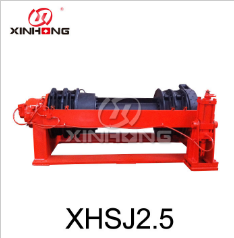
People sometimes talk about lifting and pulling equipment as if the only thing that matters is force. In real projects, that is almost never the full story. Heavy-duty work creates pressure from several directions at once. The load may be heavy, but the bigger challenge is usually what surrounds the load: limited installation space, long operating cycles, unpredictable weather, vibration, dirt, moisture, uneven motion, and the expectation that everything must still work smoothly when time is tight.
This is where many buyers start rethinking their original assumptions. A winch that looks acceptable in a basic product list can become a poor choice once the operating conditions are fully understood. A system may have enough rated capacity on paper and still fail to deliver the response, control, or durability the project actually needs.
That is why selecting a Hydraulic Winch should begin with the job itself rather than the catalog. I always think the smarter question is not “Which model is cheaper?” but “Which setup gives me fewer problems during real operation?” That shift in perspective saves money much more reliably than a lower initial price ever will.
A useful rule: in heavy-duty handling, the hidden cost usually comes from mismatch, not from the product label. When the winch does not truly fit the machine or the duty cycle, the losses appear later as delays, wear, maintenance, and operator frustration.
What Makes a Hydraulic Winch Worth Considering?
A Hydraulic Winch stands out because it is especially well suited to applications where strong pulling force, controlled movement, and robust performance matter more than convenience alone. In harsh-duty environments, hydraulic drive systems are often chosen because they can deliver stable torque and remain practical under demanding loads and long operating periods.
That advantage matters in a very direct way. Buyers do not want a machine that only works well in ideal conditions. They want something that still behaves predictably when the environment gets messy. Mud, heat, cold, salt air, shock loads, and continuous use all test whether the winch is truly built for industrial work or just described that way.
|
What Buyers Care About
|
Why It Matters
|
How a Hydraulic Winch Helps
|
|
Load control
|
Unstable movement can affect efficiency and safety
|
Hydraulic drive is often valued for smooth and controlled operation under load
|
|
High pulling force
|
Heavy-duty equipment needs reliable torque, not just nominal capacity
|
A Hydraulic Winch is widely used where strong low-speed pulling performance is needed
|
|
Harsh environments
|
Outdoor and industrial sites are rarely clean or gentle
|
Hydraulic systems are commonly selected for rugged applications and continuous-duty work
|
|
System compatibility
|
A winch must work with the broader machine setup
|
It can be matched as part of an integrated hydraulic solution rather than treated as an isolated part
|
|
Long-term operating value
|
Downtime and maintenance can erase any upfront savings
|
Properly matched hydraulic winches can support more dependable long-term operation
|
Another reason buyers choose this type of equipment is adaptability. The best projects are rarely solved by forcing a standard product into a non-standard situation. Sometimes a standard option works perfectly. Sometimes the operating condition asks for something more specific, and that is where technical matching becomes more valuable than broad marketing language.
How Should I Choose a Hydraulic Winch Without Guessing?
If I were evaluating a Hydraulic Winch for a real project, I would not begin with appearance, and I definitely would not begin with price alone. I would begin with operating requirements and work backwards from there.
Here are the questions that matter most:
-
What load must the winch handle, and is that load static, dynamic, or variable?
-
What line speed is actually needed during operation?
-
How often will the system run, and for how long in each cycle?
-
What kind of braking behavior is necessary under load?
-
What installation space, drum size, rope arrangement, and mounting limits exist?
-
What environmental conditions will affect the system over time?
-
Will the winch need to work as part of a broader hydraulic package?
These questions sound basic, but they are where the best purchasing decisions begin. Many costly problems appear when the buyer and supplier discuss product labels before discussing application logic. A machine does not care what the quotation sheet says. It only responds to whether the mechanical and hydraulic match is right.
I also recommend looking beyond the standalone winch body. In some projects, the most efficient approach is to source the related drive and transmission elements in a more coordinated way. When the winch, gearbox, motor, and hydraulic arrangement are considered together, the result is usually smoother than trying to assemble a system from unrelated pieces later.
|
Selection Factor
|
What to Confirm
|
Why It Changes the Outcome
|
|
Rated load and working load
|
How much force is needed in real operation, not just in ideal conditions
|
Prevents under-specification and unstable performance
|
|
Line speed
|
Whether the pulling speed suits the actual work rhythm
|
Too slow hurts efficiency, too fast may reduce control
|
|
Brake type
|
Holding requirements, control method, and emergency behavior
|
Strong influence on operational safety and stability
|
|
Duty cycle
|
Continuous use, intermittent use, or high-frequency use
|
Determines thermal load, wear expectations, and system design
|
|
Mounting and dimensions
|
Installation envelope and interface points
|
A technically good winch is still useless if it does not fit the machine
|
|
Hydraulic matching
|
Flow, pressure, drive compatibility, and system integration needs
|
Directly affects actual output and reliability
|
Where Does a Hydraulic Winch Prove Its Value Most Clearly?
A Hydraulic Winch shows its value best in jobs where the environment is difficult, the loads are serious, and the system needs to keep working without drama. That is why hydraulic winches are commonly associated with marine, construction, hoisting, drilling, traction, and crane-related applications.
From an application perspective, this matters because these industries do not just need force. They need force with control and endurance. They also need confidence that the equipment can remain dependable over time instead of becoming the weak link in the machine.
Typical situations where buyers often look for this kind of solution include:
-
Crane-related lifting and hoisting tasks
-
Marine or ship-deck handling work
-
Pipe hoisting and pulling operations
-
Drilling-related equipment with demanding duty conditions
-
Traction and recovery equipment
-
Industrial machinery exposed to continuous or severe outdoor use
What ties these use cases together is not just load size. It is the need for controlled performance over time. In that sense, a winch becomes part of the machine’s reliability story. Buyers who understand that usually ask better questions, make better decisions, and avoid a lot of preventable frustration later.
Which Buying Mistakes Usually Cause Trouble Later?
I think this is the part too many product pages skip. Buyers are not just helped by being told what to buy. They are helped by being told what to avoid. In winch procurement, the expensive mistakes are usually predictable.
The most common ones include:
-
Choosing only by price
Low initial cost can look attractive, but it means very little if the unit is mismatched, hard to integrate, or more likely to create downtime.
-
Ignoring duty cycle
A unit that looks suitable for occasional work may struggle badly under continuous heavy use.
-
Treating the winch as an isolated part
Without checking hydraulic and mechanical compatibility, the final system may perform below expectation.
-
Focusing only on load rating
Rated capacity matters, but control, braking, line speed, and installation fit matter too.
-
Giving incomplete application information to the supplier
The less the supplier knows, the more likely the recommendation becomes generic instead of useful.
One of the smartest things a buyer can do is describe the operating condition honestly and in detail. That includes load type, site environment, machine platform, working rhythm, and any limits in space or control requirements. The more clearly the application is defined, the more accurately the solution can be matched.
The uncomfortable truth: many “product failures” are really selection failures. The equipment may not be inherently bad at all. It may simply have been asked to do a job it was never properly matched for.
Why Does the Manufacturer Matter More Than Many Buyers Expect?
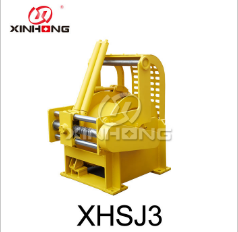
When industrial buyers compare offers, it is easy to focus on numbers first. But with a Hydraulic Winch, the manufacturer’s technical understanding often matters just as much as the product itself. That is because winch performance depends heavily on matching, not just manufacturing.
If a supplier can only ship a standard unit, that may be enough for some projects. But if the project involves special working conditions, installation limits, or system integration needs, the conversation has to go deeper. A supplier with experience in not only winches but also related components can often help buyers solve the real problem faster.
Ningbo Xinhong Hydraulic Co.,Ltd. presents itself as a manufacturer focused on hydraulic winches, while also offering related components such as reduction gearboxes, hydraulic motors, and hydraulic systems. That matters because many buyers are not looking for a random standalone product. They are looking for a more stable and coherent hydraulic power solution that can be aligned with the working condition from the start.
This kind of support becomes more valuable when the project involves any of the following:
-
Non-standard operating conditions
-
Space limitations or interface constraints
-
Demand for long-term or continuous-duty operation
-
Applications in cranes, marine equipment, traction machinery, hoisting systems, or drilling environments
-
Need for a customized proposal rather than a one-size-fits-all selection
In other words, the ideal supplier is not just a seller. The ideal supplier reduces uncertainty. That is what serious buyers are really paying for when they choose an experienced manufacturing partner.
What Do Buyers Usually Ask Before Making a Final Decision?
Can a Hydraulic Winch be customized for special operating conditions?
Yes. In many industrial projects, customization is important because working conditions are not always standard. A supplier that understands application-specific matching can often recommend a more suitable solution than a basic stock-only approach.
Is a Hydraulic Winch only suitable for marine applications?
No. Marine work is one common use case, but hydraulic winches are also widely used in construction, crane systems, traction equipment, pipe hoisting, drilling-related machinery, and other heavy-duty scenarios.
Should I focus on rated load first when comparing options?
Rated load is important, but it should not be the only factor. Line speed, brake behavior, duty cycle, environmental conditions, installation space, and hydraulic compatibility all influence real performance.
Why is integrated hydraulic matching such a big deal?
Because a winch does not operate alone in real machinery. When the hydraulic motor, gearbox, and system conditions are considered together, the result is often more stable and more efficient than assembling mismatched parts later.
What is the main reason buyers end up replacing a winch too soon?
Very often, it comes down to poor selection rather than simple product age. A mismatched winch may face overload, poor duty-cycle fit, control issues, or operating stress that shortens service life unnecessarily.
If you are sourcing a Hydraulic Winch, the best next step is not to chase the broadest promise or the lowest quote. It is to define the actual working condition clearly and discuss it with a manufacturer that understands how winch performance connects with hydraulic matching, structural demands, and long-term field use.
That is where a capable supplier becomes valuable. Instead of forcing your project into a generic option, you can move toward a solution that is shaped around how your equipment will truly operate. For buyers who need dependable pulling power, application-based matching, and practical support from inquiry to delivery, Ningbo Xinhong Hydraulic Co.,Ltd. is worth a closer look.
Need a hydraulic winch solution that fits your equipment instead of forcing your equipment to fit the winch?
If you are comparing options for crane, marine, traction, hoisting, or drilling applications, now is the right time to discuss your operating conditions with a team that understands both product design and hydraulic matching. Contact us to talk through your project requirements, request a suitable proposal, and find a Hydraulic Winch solution built for real working pressure.