


Article Abstract
Gear Reducers are often selected only after a machine shows trouble: a winch pulls unevenly, a slewing drive reacts too slowly, a track drive overheats, or a hydraulic motor cannot deliver stable output under load. In many cases, the issue is not the motor alone. It is the mismatch between speed, torque, load condition, duty cycle, and the transmission unit between the motor and the driven equipment.
This article explains how Gear Reducers help hydraulic machinery convert high-speed motor output into usable torque, how buyers can compare reducer structures, and what details should be checked before placing an order. It also introduces practical selection factors for engineers, equipment builders, maintenance teams, and procurement managers who need a durable transmission solution for demanding machinery.
Table of Contents
- Article Outline
- Common Problems Gear Reducers Are Asked to Solve
- How Gear Reducers Work in Hydraulic Machinery
- Key Selection Factors Before Buying
- Comparison Table for Practical Selection
- Typical Application Scenarios
- Supplier Evaluation Checklist
- Maintenance Points That Extend Service Life
- FAQ
- Conclusion and Contact Us
Article Outline
- Why machinery buyers should not treat Gear Reducers as simple accessories.
- How speed reduction and torque multiplication improve equipment stability.
- Which performance details matter most when comparing reducer options.
- Where Gear Reducers are commonly used in hydraulic drive systems.
- What to ask a manufacturer before confirming specifications.
- How proper maintenance reduces downtime and replacement costs.
Common Problems Gear Reducers Are Asked to Solve
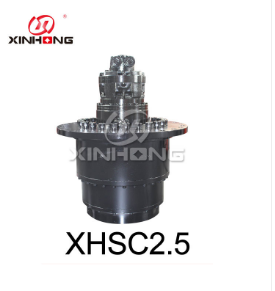
A hydraulic machine can look powerful on paper and still perform poorly in real work. One common reason is that the motor speed does not match the actual motion required by the equipment. A hydraulic motor may rotate too fast for a winch drum, a slewing platform, a wheel drive, or a track drive. Without a suitable reduction unit, the machine may move roughly, lose control under load, or fail to deliver enough pulling force.
Gear Reducers are designed to correct this mismatch. They reduce rotational speed while increasing output torque, allowing the driven part to work with more controlled movement and stronger load-handling ability. For buyers, this matters because field failures rarely happen in perfect laboratory conditions. They happen when the machine is lifting, pulling, rotating, climbing, or cutting under changing loads.
Many customers come to a reducer supplier with one of these practical pain points:
- The machine has enough motor power but still lacks working torque.
- The output speed is too high, causing unstable or unsafe movement.
- The gearbox produces noise, heat, or vibration after short operation.
- The reducer fails too often under shock load or continuous duty.
- The installation space is limited, but the torque requirement is high.
- The buyer needs a standard ratio quickly but may also need a customized ratio for a special machine design.
These problems are not solved by choosing the cheapest unit with a similar size. They require attention to reduction ratio, gear design, bearing arrangement, housing strength, sealing quality, lubrication, backlash, and compatibility with the hydraulic motor.
How Gear Reducers Work in Hydraulic Machinery
In a hydraulic drive system, the hydraulic motor converts fluid power into rotary mechanical power. However, the motor’s raw output is not always suitable for direct connection to the machine. Gear Reducers sit between the motor and the driven mechanism, adjusting the relationship between speed and torque.
The basic idea is simple: when rotational speed is reduced through gears, the output torque increases. This allows machinery to perform slower but stronger movement. For example, a winch does not need extremely high drum speed when lifting or pulling heavy loads. It needs controlled rotation and dependable torque. A slewing drive does not need sudden rapid movement. It needs smooth rotation and the ability to hold position under load.
Planetary gear structures are widely used in hydraulic equipment because they offer compact size, high torque density, and balanced load sharing. In a planetary arrangement, several planet gears mesh around a sun gear, distributing load across multiple contact points. This design can help reduce stress concentration and support heavy-duty work in a smaller package.
For equipment manufacturers, this compactness is valuable. Mobile machinery, marine equipment, construction machines, and industrial hydraulic systems often leave limited room for transmission components. A well-matched reducer can provide the needed output without forcing a major redesign of the machine frame.
Key Selection Factors Before Buying
Choosing Gear Reducers should begin with the machine’s real working conditions, not only with a catalog model. The same nominal torque can perform differently depending on load impact, duty cycle, lubrication, alignment, and operating environment.
Before confirming a model, buyers should prepare the following information:
- Input speed: The speed range from the hydraulic motor or other driving source.
- Required output speed: The final speed needed by the winch, wheel, track, slew drive, or other mechanism.
- Output torque: The torque needed during normal operation and peak load conditions.
- Reduction ratio: The ratio required to convert input speed into proper output speed.
- Duty cycle: Whether the machine works intermittently, frequently, or continuously.
- Shock load: Whether the system faces sudden starts, stops, impacts, or load reversals.
- Mounting style: Flange, shaft, or customized installation requirements.
- Working environment: Dust, humidity, temperature, marine exposure, mud, or vibration.
Ningbo Xinhong Hydraulic Co.,Ltd. is connected with hydraulic transmission applications where reducer selection often needs to consider motor matching, reduction ratio, torque output, and machine installation limits. For buyers who are replacing an existing unit, it is useful to provide photos, nameplate data, mounting dimensions, shaft details, and the actual failure symptoms. For new equipment projects, a brief working-condition description can help the manufacturer recommend a more suitable option.
Comparison Table for Practical Selection
| Selection Point | Why It Matters | Buyer’s Practical Check |
|---|---|---|
| Reduction Ratio | Determines how much input speed is reduced and how much torque can be delivered at the output. | Compare motor speed with the required working speed of the driven mechanism. |
| Torque Capacity | Undersized torque capacity causes overheating, tooth damage, bearing stress, and premature failure. | Confirm both continuous torque and peak torque, not only a general power rating. |
| Backlash | Lower backlash supports smoother positioning and more stable movement in rotation or lifting systems. | Ask whether the reducer is suitable for controlled movement or only general transmission. |
| Gear Quality | Gear accuracy affects noise, efficiency, service life, and load distribution. | Check whether the supplier explains gear machining, heat treatment, and inspection control. |
| Seal Reliability | Poor sealing allows oil leakage or contamination, especially in outdoor and mobile machinery. | Describe the operating environment, including dust, water, mud, or marine exposure. |
| Motor Compatibility | The reducer must match the hydraulic motor connection, input form, and torque-speed characteristics. | Provide motor model, flange dimensions, shaft type, and rotation direction requirements. |
Typical Application Scenarios
Gear Reducers are used in many hydraulic systems where controlled force is more important than raw speed. In a winch drive, the reducer helps convert motor speed into controlled drum rotation, making lifting and pulling more stable. In a slew drive, it supports smooth turning of a crane, excavator attachment, platform, or rotating structure. In a track drive, it helps deliver strong low-speed movement for mobile equipment working on uneven ground.
They are also used in wheel drives, cutter heads, marine machinery, construction equipment, mining-related machinery, and industrial transmission systems. Each application has its own risk. A cutter head may face impact and material resistance. A winch may face sudden load changes. A slew drive may need precise motion and holding strength. A track drive may face mud, vibration, and long operating hours.
This is why the best reducer choice is not always the largest one. A properly selected reducer should match the load, fit the installation space, connect smoothly with the motor, and provide a realistic safety margin. Oversizing can increase cost and weight, while undersizing can create expensive downtime.
Supplier Evaluation Checklist
A reliable supplier should do more than quote a model number. Buyers should look for technical communication, practical manufacturing experience, and the ability to understand real machine conditions.
- Can the supplier explain the difference between standard and customized reduction ratios?
- Can the supplier match Gear Reducers with hydraulic motors or other drive sources?
- Can the supplier discuss torque, speed, mounting, and environmental requirements before quotation?
- Can the supplier provide dimensional information for installation planning?
- Can the supplier support repeat orders for equipment production or replacement needs?
- Can the supplier communicate clearly when an application requires a stronger design instead of a standard unit?
For international buyers, communication speed and technical clarity matter. A delayed answer can slow production planning, while an unclear answer can lead to a wrong purchase. When machinery downtime is costly, the reducer should be treated as a key transmission component, not a minor spare part.
Maintenance Points That Extend Service Life
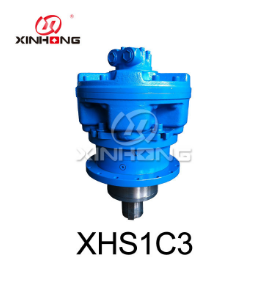
Even a well-designed reducer needs correct use and maintenance. Many field problems are caused by poor lubrication, overload, misalignment, contamination, or ignoring early warning signs. Maintenance teams should not wait until the reducer is already noisy or leaking heavily.
Useful maintenance habits include:
- Check oil level and oil condition according to the working schedule.
- Inspect seals for leakage, especially after long operation or harsh-site use.
- Listen for abnormal noise during startup, load change, and shutdown.
- Watch for unusual heat, vibration, or unstable movement.
- Keep mounting bolts properly tightened.
- Avoid repeated overload beyond the reducer’s rated working condition.
- Record failure symptoms before removing the reducer, as this helps future diagnosis.
Preventive checks are cheaper than emergency replacement. For equipment used in rental fleets, construction sites, ports, marine environments, or mining-related work, a maintenance record can also help identify whether the reducer is correctly matched to the machine or being pushed beyond its intended range.
FAQ
1. Are Gear Reducers only used to slow down machinery?
No. Speed reduction is only one part of their function. Their more important value is converting motor output into usable torque for heavy-duty motion. A suitable reducer helps the machine move with better control, stronger output, and improved stability under load.
2. Is a higher reduction ratio always better?
Not always. A higher ratio can increase torque and reduce speed, but the machine may become too slow for its working cycle. The right ratio depends on motor speed, required output speed, load condition, and the expected working rhythm of the equipment.
3. Can one reducer model fit different hydraulic motors?
Sometimes, but compatibility must be checked. The input interface, flange, shaft, rotation direction, torque range, and installation space should all match. Buyers should not rely only on similar appearance or rough dimensions.
4. Why do some reducers fail even when the rated torque looks sufficient?
Rated torque may not reflect shock load, poor lubrication, contamination, misalignment, or continuous heavy-duty operation. A reducer that works well in a light-duty condition may fail quickly when exposed to impact, frequent starts, or harsh outdoor environments.
5. What information should I send before asking for a quotation?
Send the application type, motor data, input speed, desired output speed, torque requirement, reduction ratio if known, mounting dimensions, working environment, and any photos or drawings available. If it is a replacement project, nameplate data and failure details are also helpful.
6. Do Gear Reducers need customized design?
Standard models can work for many common applications, especially when the required ratio and mounting form are conventional. Customized support may be needed when the machine has special torque requirements, limited space, unusual mounting, or a non-standard working cycle.
Conclusion and Contact Us
Gear Reducers play a direct role in whether hydraulic machinery works smoothly, safely, and efficiently. The right reducer can reduce speed, increase torque, improve movement control, and help equipment handle demanding loads with fewer unexpected failures. For buyers, the smartest approach is to match the reducer to real working conditions rather than choosing only by price or size.
If you are selecting Gear Reducers for winch drives, slew drives, track drives, wheel drives, cutter heads, or other hydraulic transmission systems, Ningbo Xinhong Hydraulic Co.,Ltd. can help review your working requirements and discuss suitable product options. Share your motor data, torque needs, ratio expectations, drawings, or replacement details, and contact us to get practical support for your next hydraulic machinery project.